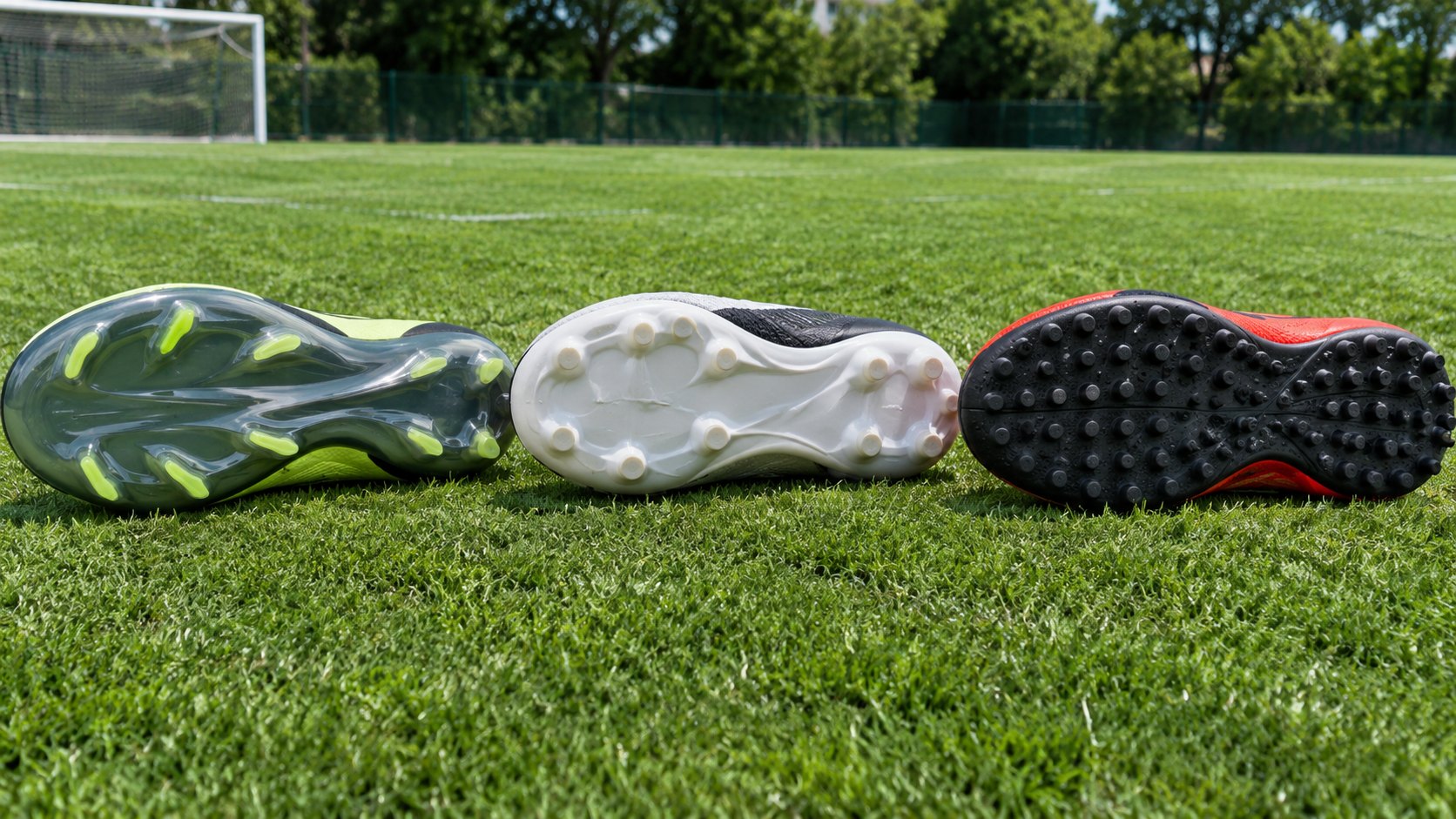
Two boots can look identical and behave completely differently on the pitch. The difference is the soleplate, and the abbreviation on the box tells you what it is for.
FG: firm ground
Bladed or conical studs for natural grass that is dry or slightly wet. This is the most common type and what most players mean by football boots. The Velocity Elite FG has a thin knit upper and a light plate for quick acceleration.
AG: artificial grass
More, shorter and hollow studs for modern 3G and 4G artificial pitches with rubber infill. FG boots on artificial grass grip too well: the stud sticks in the turf while the knee keeps turning. Many clubs now ban long FG studs on their 3G pitches.
TF: turf
Dozens of small rubber nubs for short, hard artificial turf, five-a-side cages and indoor-outdoor courts. The Academy TF is a durable choice for weekly small-sided games and training.
Which pair first?
- You play on grass at the weekend and train on 3G midweek: FG for matches, AG or TF for training.
- You only play five-a-side: TF is all you need.
- Kids growing fast: one versatile TF or AG pair, size reviewed every season.
Fit and care
Boots should fit closely, with no more than a finger's width in front of the toes, and the heel locked in. Wear them around the house for an evening before the first match. After a muddy game, knock off the dirt, stuff them with newspaper and let them dry away from radiators: heat cracks the upper and warps the plate.
Don't forget shin guards: most leagues won't let you on the pitch without them.