There is no best running shoe, only the best shoe for your runs. Answer four questions and the choice narrows to two or three models.
1. Where do you run?
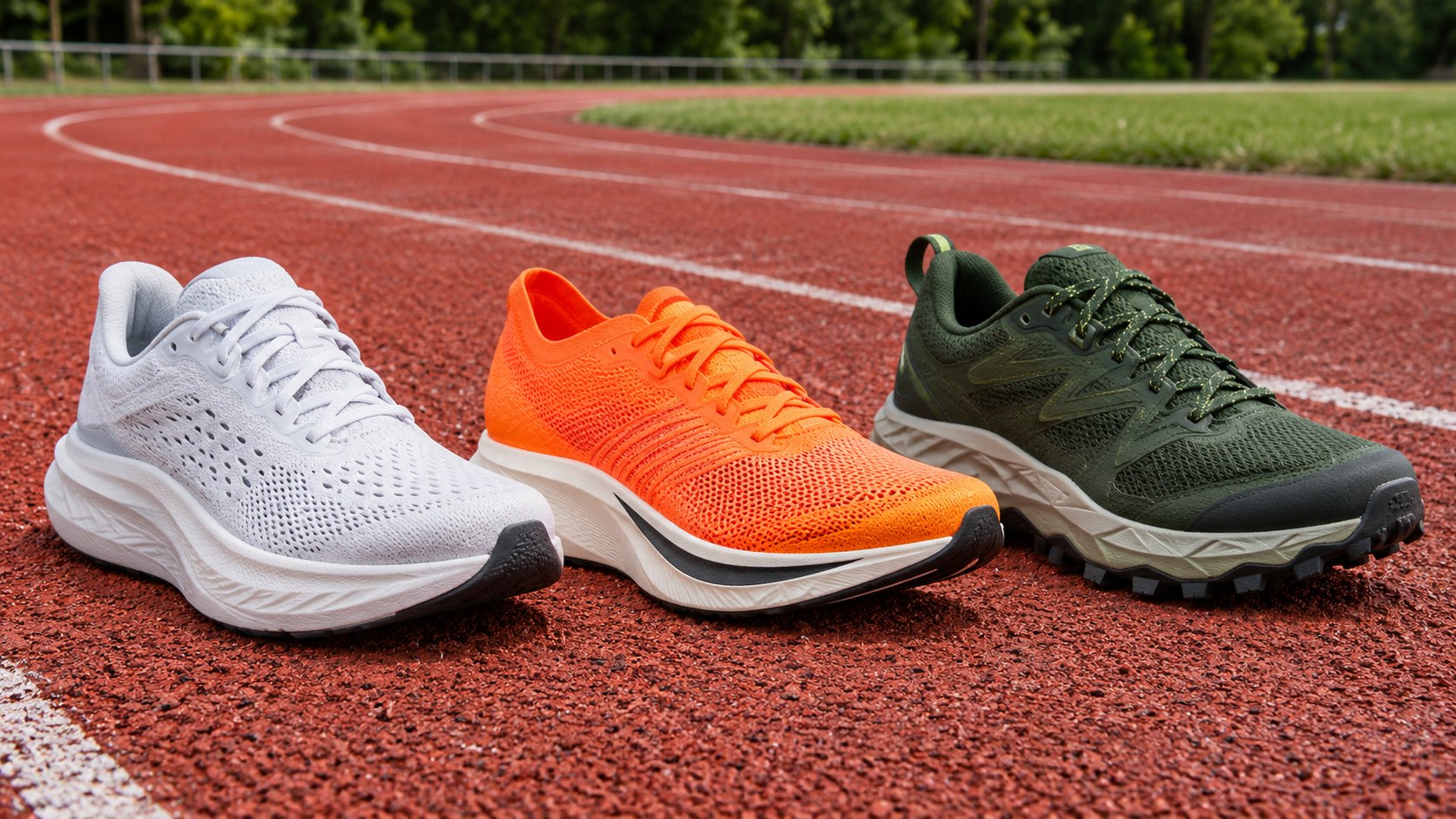
Road shoes have smoother outsoles and more foam, built for asphalt and the treadmill. Trail shoes add deep lugs, a rock plate and a tougher upper. If you mix both, choose by the surface you run on most: a road shoe handles a dry park path, but a trail shoe feels clunky on pavement.
2. How much cushioning?
- Daily trainer: soft, stable and durable, for most of your weekly miles. The CloudPace is our go-to first pair for new runners.
- Max cushioning: for recovery runs and high-mileage marathon blocks, like the CloudPace Max.
- Racing and tempo: light and firm, often with a plate. The Tempo Racer is made for 5K to half marathon efforts, not for every run.
3. What drop?
Drop is the height difference between heel and forefoot. 8-10 mm suits most runners and is kind to calves and Achilles tendons. Low-drop shoes (0-5 mm) encourage a midfoot strike but need a gradual transition over several weeks.
4. Does it fit?
- A thumb's width of space in front of the longest toe.
- The heel stays put when you walk uphill or climb stairs.
- No pressure points across the widest part of the foot.
Try shoes in the afternoon, when your feet are slightly larger, and wear the socks you run in.
When to replace them
Most running shoes last 300-500 miles (500-800 km). If the foam feels flat, the outsole is worn smooth or your knees start to complain after familiar routes, it's time for a new pair. Many runners keep two pairs in rotation: the foam recovers between runs and both last longer.
Browse all running shoes in the shop.