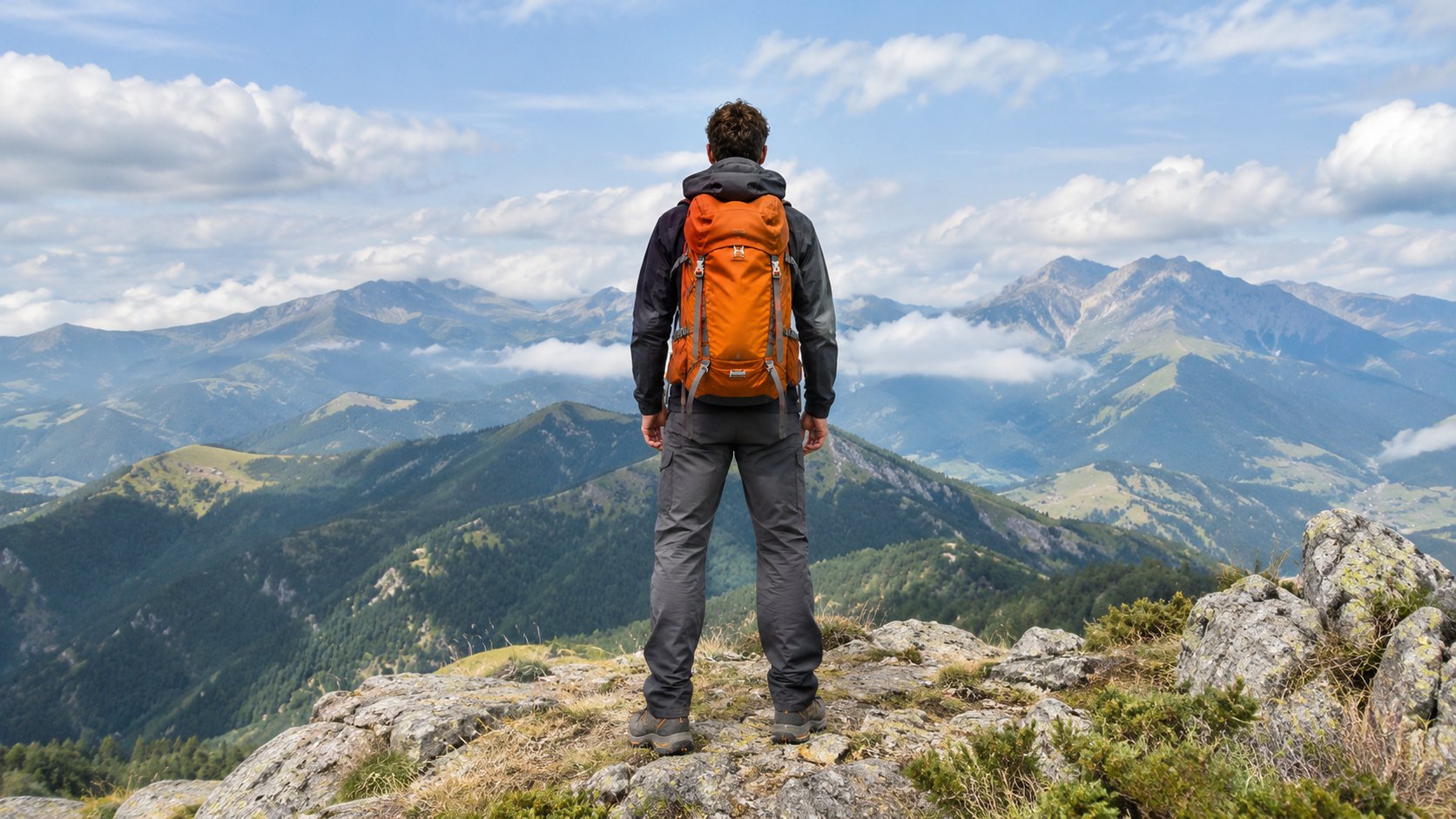
A good backpack disappears on your back. A bad one makes a beautiful trail feel twice as long. Start with how long you will be out, then make sure the pack fits.
Volume by trip length
- Day hike: 20-35 liters. Water, layers, food, a first-aid kit. The Summit 32 L has a ventilated back panel and a built-in rain cover.
- Overnight or hut-to-hut: 35-50 liters.
- Multi-day with a tent: 50-70 liters. The Trek 55 L has a sleeping bag compartment and an adjustable back.
If you are between two sizes, choose the smaller one: an empty pack tempts you to carry things you won't use.
Torso length, not your height
Measure from the bony bump at the base of your neck to the top of your hip bones. That number, not your height, decides the frame size or the setting on an adjustable back.
Hip belt does the work
On anything heavier than a day load, about 80% of the weight should sit on your hips. Put the pack on, close the hip belt over the top of the hip bones, then tighten the shoulder straps and finally the load lifters above your shoulders. The shoulder straps should hug, not carry.
Features worth having
- Hip belt pockets for snacks and a phone.
- A hydration sleeve or easy-to-reach bottle pockets.
- A rain cover, or a dry bag inside for the sleeping bag and spare clothes.
- Ventilation on the back panel for warm days.
Packing in one minute
Heavy items close to your back and between the shoulder blades, light bulky ones at the bottom, things you need during the day on top and in the lid. Pair the pack with broken-in boots like the Trailhead Mid and you are ready for the trail.