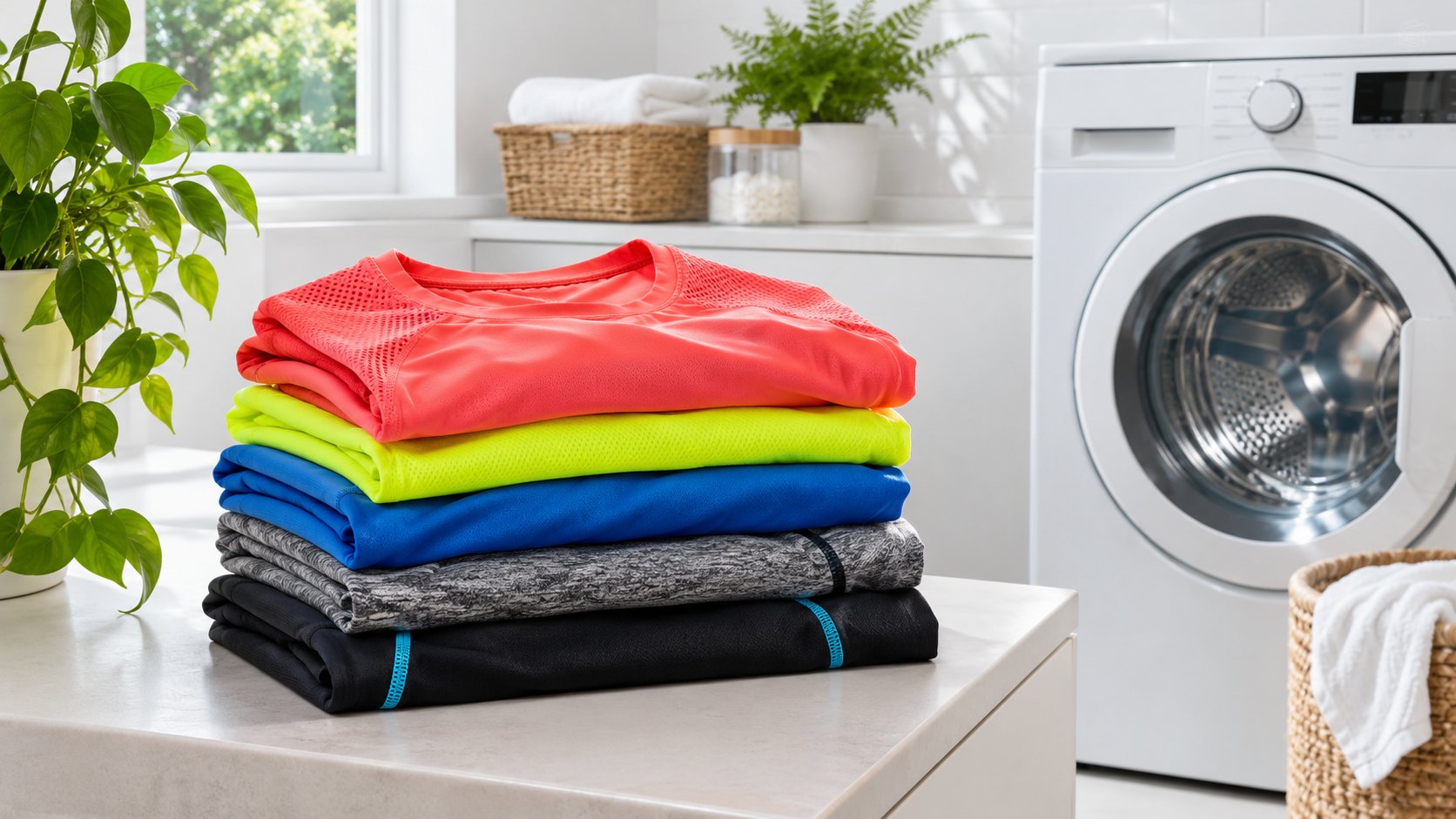
Technical fabrics wick sweat, stretch and block wind because of how their fibers are built. Wash them like cotton towels and they slowly stop doing their job. A few habits keep them working for years.
The basic rules
- Turn garments inside out and close zips and Velcro so they don't snag other clothes.
- Wash at 30 °C (86 °F) on a gentle or synthetics cycle.
- Use a small dose of liquid detergent. Powder can stay in the fabric.
- Skip fabric softener: it coats the fibers and kills wicking.
- Air dry. The tumble dryer shrinks elastane and weakens seams.
Leggings and sports bras
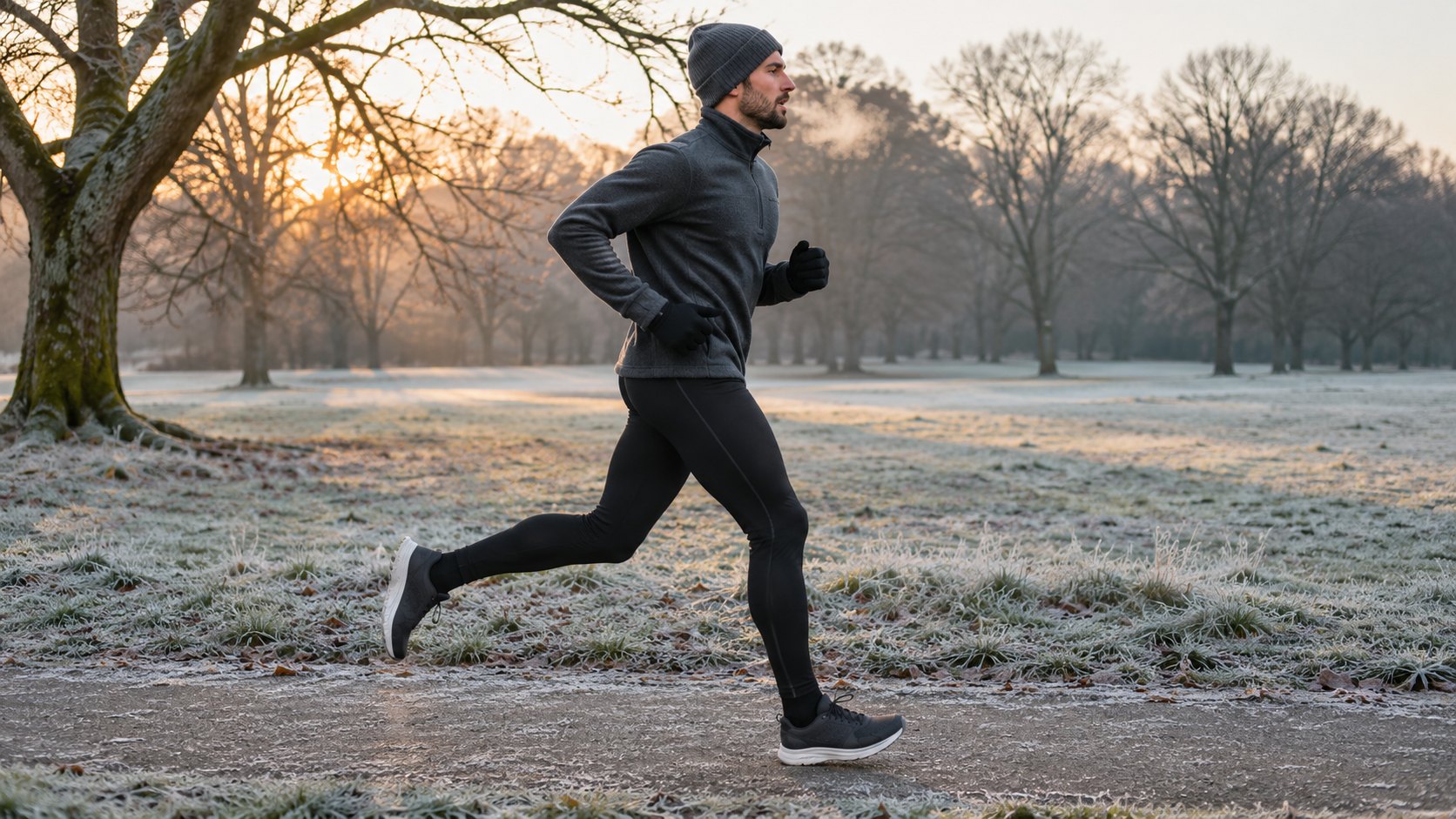
Elastane is what gives leggings and a sports bra their support. Heat is its enemy: wash cold, never iron and dry flat or hanging. Wash after every workout, sweat breaks the fibers down faster than washing does.
Merino
Merino naturally resists odor, so it needs less washing: air it out after a run and wash after two or three wears. Use a wool program and a wool detergent, then dry flat so it keeps its shape.
Waterproof jackets
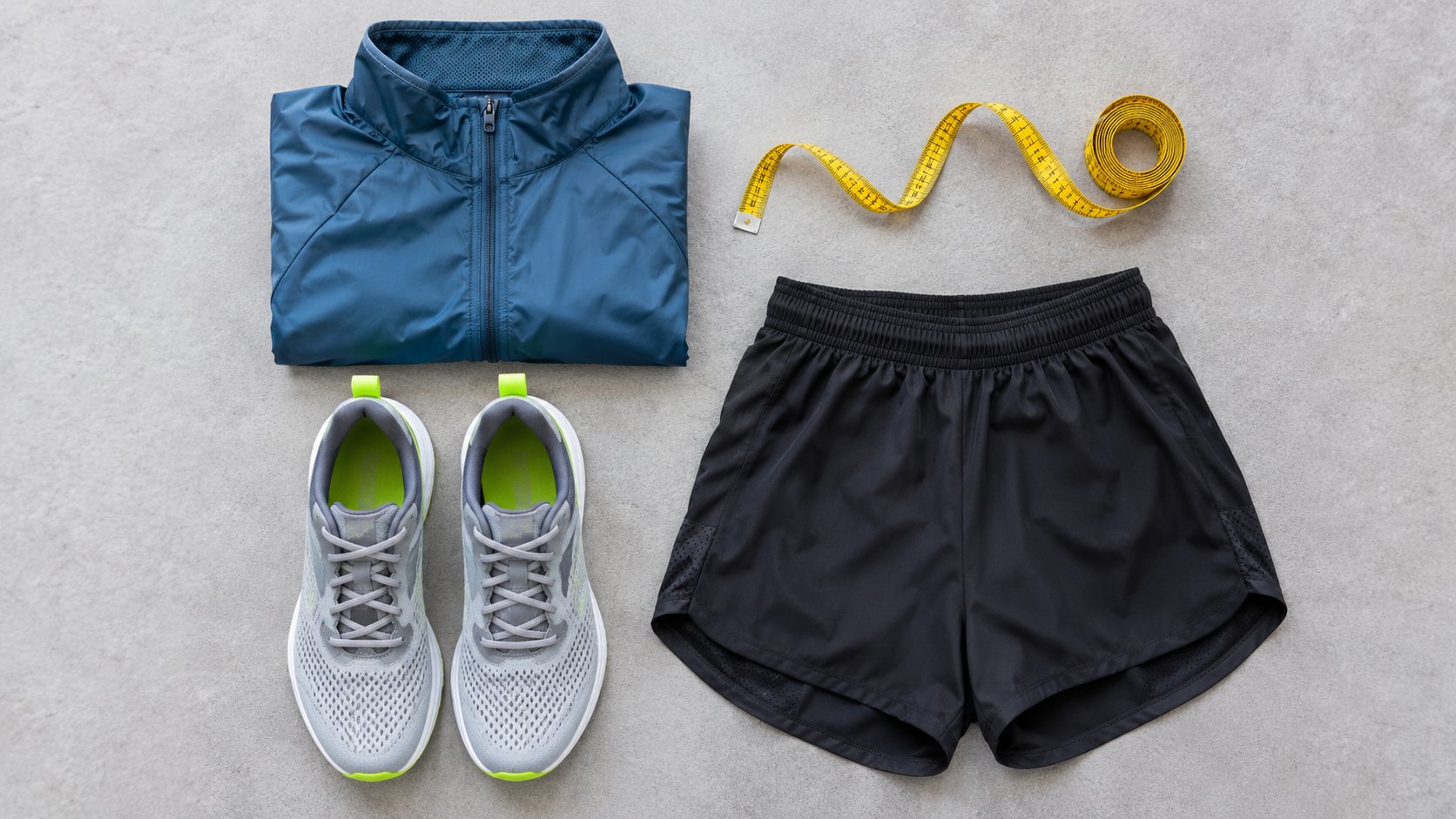
Dirt and body oils clog the membrane of a shell like the Storm Shell, so wash it a few times a season with a technical cleaner. When rain stops beading on the surface, a short warm tumble or a few minutes with an iron on low through a towel reactivates the water-repellent coating. After many washes, refresh it with a spray-on treatment.
Shoes
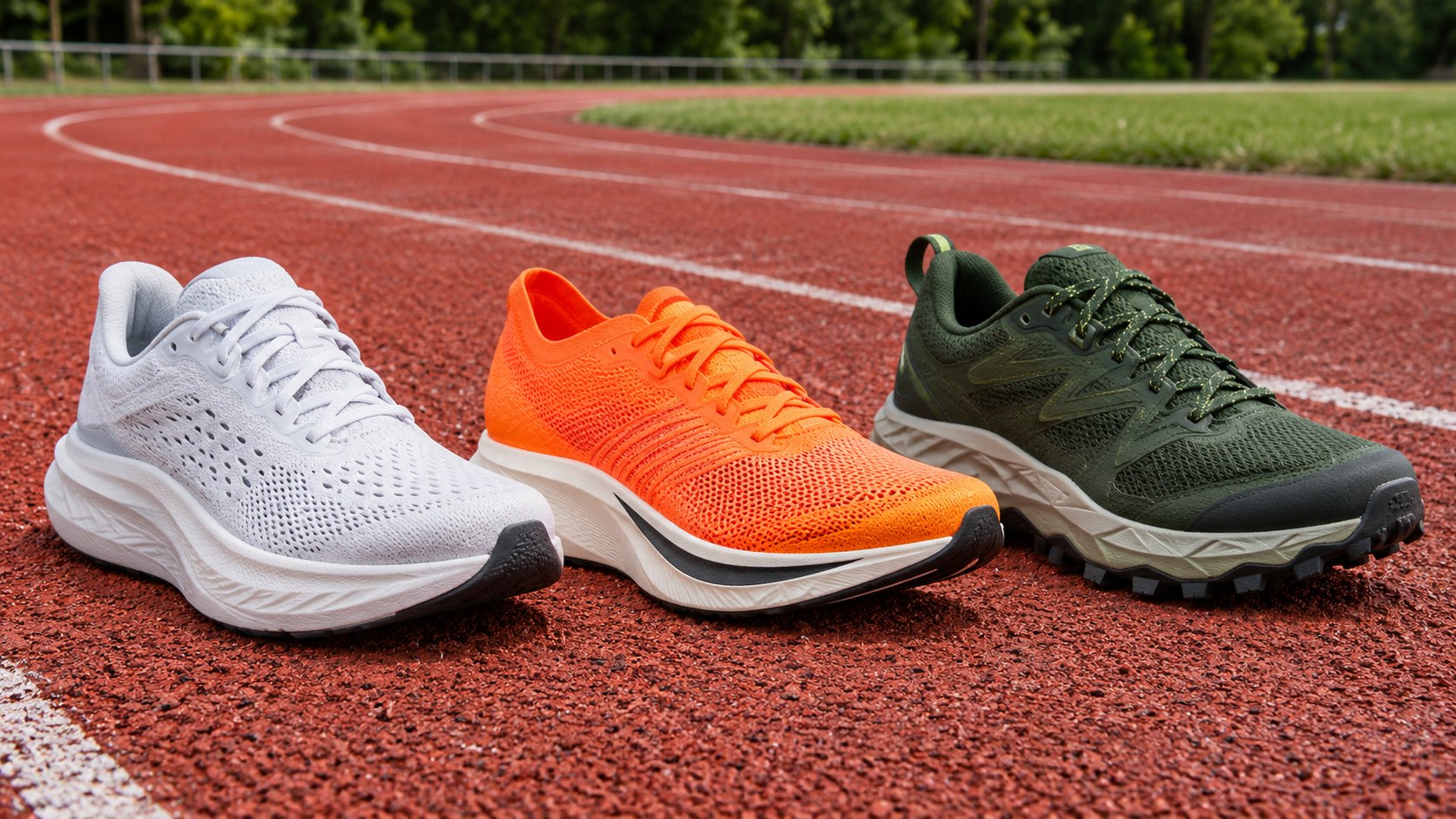
Never put running shoes in the washing machine. Remove the insoles, brush off dirt, wash the upper with lukewarm water and a little soap, stuff with paper and dry at room temperature.
Odor that won't go away
Soak the garment for 30 minutes in cold water with a cup of white vinegar before the normal wash. It removes the bacteria that detergent leaves behind.