An expensive bike in the wrong size is slower and less comfortable than a cheap one that fits. Getting the basics right takes a tape measure and ten minutes.
Frame size
Our road and gravel bikes come in four sizes. As a starting point:
- S: 5'3"-5'7" (160-170 cm)
- M: 5'7"-5'10" (170-178 cm)
- L: 5'10"-6'1" (178-186 cm)
- XL: 6'1"-6'4" (186-194 cm)
Between two sizes? Riders with long legs and a short torso usually prefer the larger frame; those with a longer torso, the smaller one. On a mountain bike like the Trail 29, the smaller size is more playful on technical trails.
Saddle height
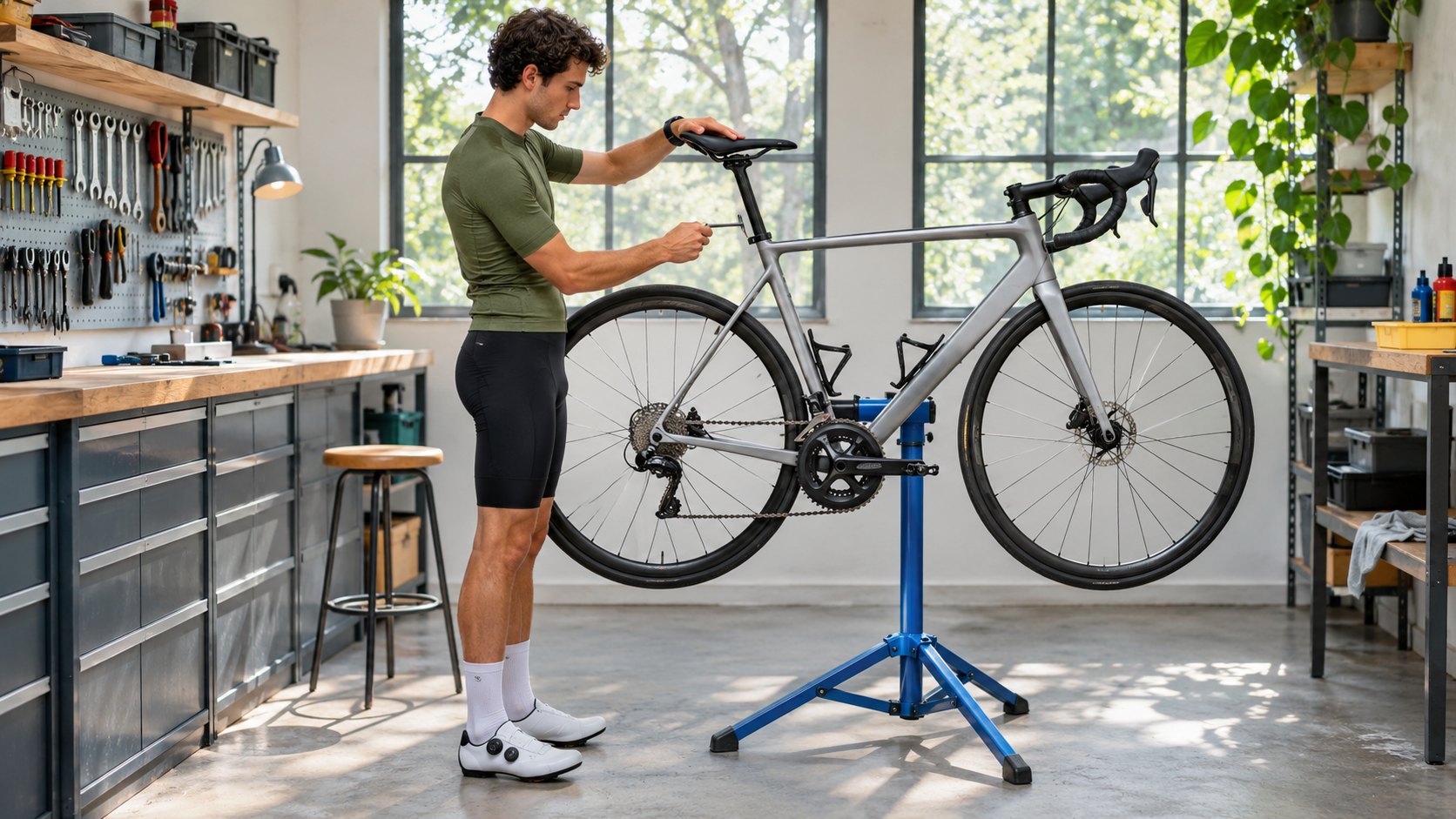
Sit on the bike next to a wall, put your heel on the pedal at its lowest point and straighten your leg. When you pedal normally, with the ball of the foot on the pedal, the knee should stay slightly bent. A saddle that is too low overloads the front of the knee; too high and your hips rock side to side.
Saddle position and reach
Set the saddle level first. Then, with the pedals horizontal, the front of your forward knee should be roughly above the pedal axle. Reach to the bars should let you ride with relaxed, slightly bent elbows. If your hands go numb or your neck aches, the reach is probably too long: a shorter stem fixes it.
Road, gravel or city?
Fit matters on every bike, but the riding position differs. The Apex 105 has an endurance geometry for long rides, the Wander AL sits you a little more upright for rough roads, and a city bike puts comfort first. Not sure which one is yours? Read road or gravel: which bike is for you.